It takes many hands to bring these blankets to life! Talent from all over our region, and a grant from the Community Foundation of WNC, have made this project possible. From the spark of an idea to a beautiful, locally grown and crafted product, there are many steps along the way. It starts on the farm, with the fleece, shorn once a year. Then skirting, scouring, carding and spinning, dyeing, designing and weaving.
STEP 1 | REARING
A blanket begins on the farm, with the daily act of raising and tending fiber animals, from sheep to alpaca to angora goat. Grazing, feeding and watering. Providing fencing, shelter, and guardian animals. Taking care with routine wellness checks, and special preparations before and after lambing. And a shepherd’s life goes deeper than that. It is crucial to know and observe the animals well. Fiber animals are prey animals with deep survival instincts. They will mask their injury or sickness in order to protect themselves and the survival of the flock from potential predators. It is a special thing to gain the trust of fiber animals, and to be let into their world as caretaker and even companion. It takes patience and time, and many a shepherd will tell you, it is downright magical.
STEP 2 | SHEARING
All fiber animals need to be sheared, once, sometimes twice a year. Often people ask, does this hurt the animal? In truth, it hurts the animal not to shear it. More specifically, it overheats the animal, which can lead to all manner of problems. Imagine being tasked to wear your winter coat all summer long. If you have ever had the chance to watch a shearer in action, you know it is an art form. There is a specific sequence of positions that the shearer will move through, in effort to handle the sheep with care and efficiency. And, then of course, shearing equals fiber. And what we can make with fiber - wool, alpaca and mohair, is endless, from clothing to housewares to housing insulation. Being in the business of blankets, we seek fiber that is high quality from healthy animals, with strength and sheen, and of a uniform length, for processing at the mill. We are lucky in our fibershed to have such talented shearers as we do!
STEP 3 | SKIRTING
Skirting is the term for the process of removing, by hand, any short bits of fiber, straw, burrs and other vegetable matter from a raw fleece. Skirting is done after the fleece is shorn and requires a special skirting table with an open mesh top, so that discarded pieces can fall to the floor as the fleece is worked. The best way to skirt is with friends! It makes for quick work and more fun. At Local Cloth we have formed a Skirting Team that meets regularly to work on fleece for the Blue Ridge Blankets Project. To date, over 65 people have had a hand in skirting with us! Truly, it takes a village to bring these blankets to life. If you want to join us sometime, check our Skirting Team Schedule.
STEP 4 | CARDING
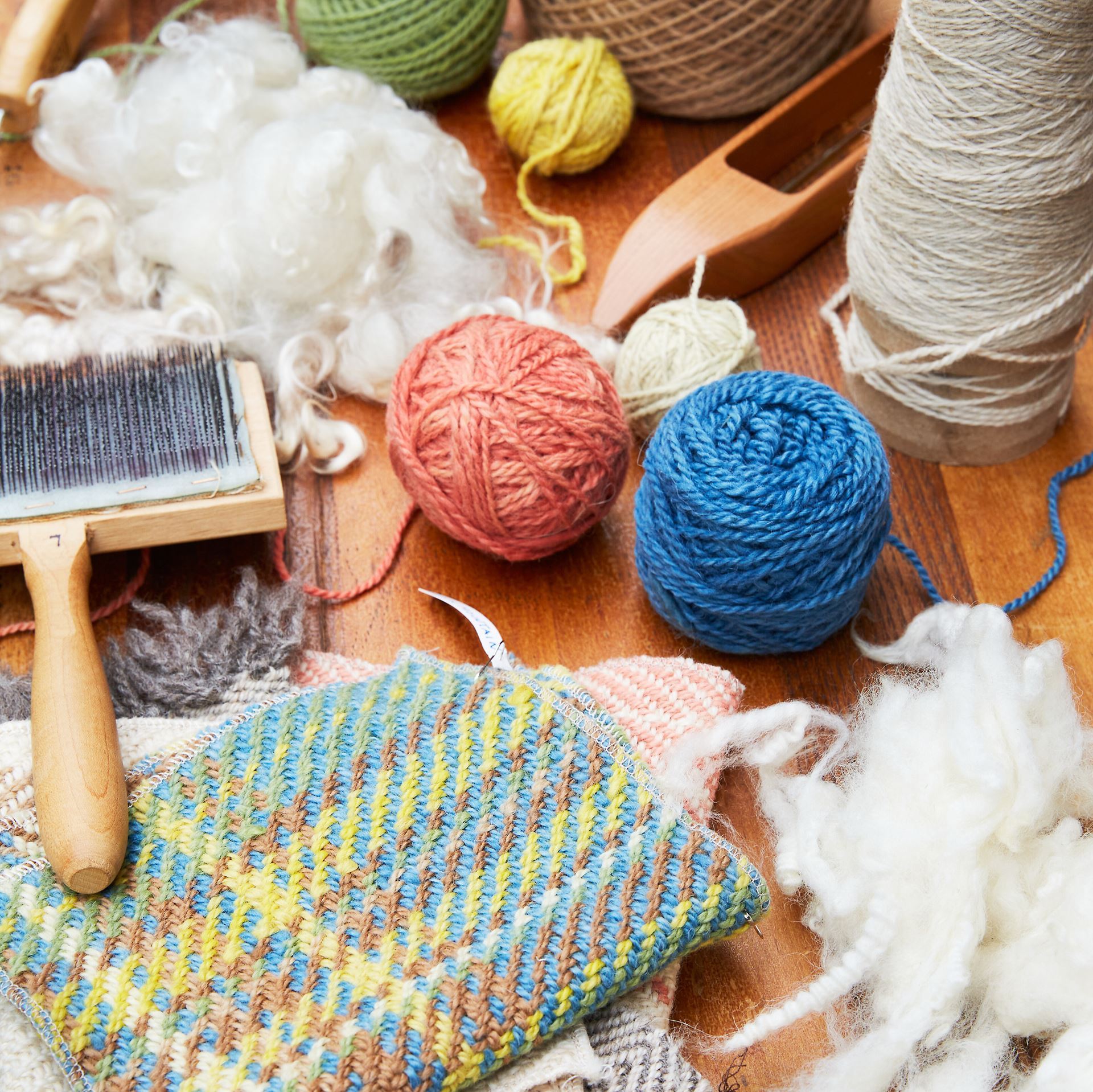
After the wool is skirted, we pack it up and send it off to the mill. Once the wool arrives at the mill, it is washed, dried and carded. Wool carding is the process of brushing wool fibers to evenly align them. Carding is considered the "heart of spinning" because it produces fibers that are well-opened, parallel and blended - preparing them for the spinning processes that will make the yarn.
STEP 5 | SPINNING
Once the fiber has gone through the carding stage at the mill, it is ready for the final processes that transform it into yarn. The fiber next passes through the Draw Frame, and then the Spinner, Plier, and finally, the Skein Winder. Curious to take a peek inside a fiber mill and learn more about the magic machinery of spinning? We are fortunate to have Two Roots Alpacas and Fiber Mill in our Fibershed, where we have had our fiber spun into gorgeous yarn on many occasions. Check out the Two Roots Alpacas and Fiber Mill website for an educational video, walking you through all of the steps from farm to yarn!
STEP 6 | DYEING
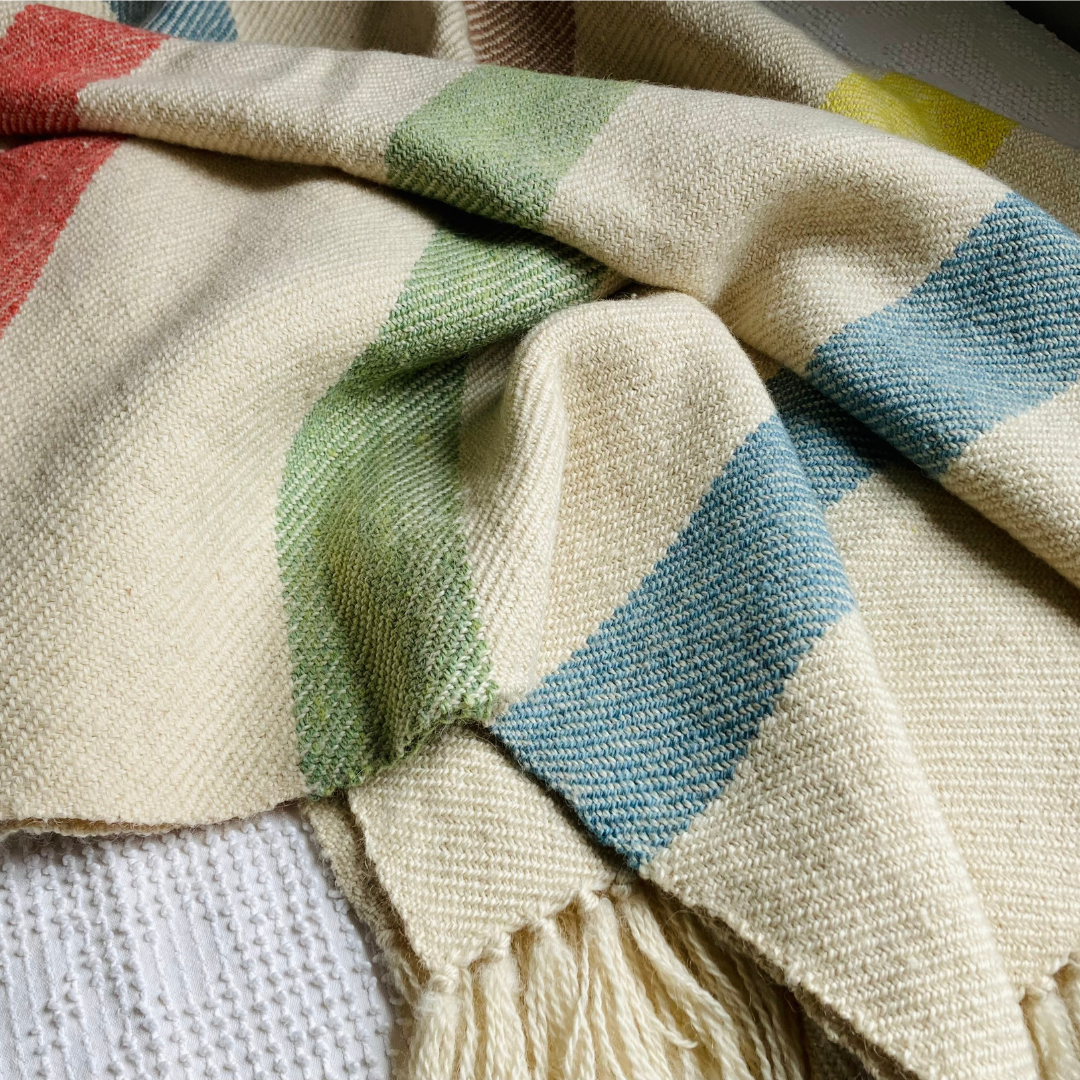
The natural dyes in our Blue Ridge Blankets include the full array of heritage colors: indigo (blue), madder root (red), weld (yellow) and walnut (brown). Each of these dye plants grows readily in our region, and we often source from the natural dye garden of the Fiber Arts Program at Warren Wilson College.
STEP 7 | DESIGNING
After the dyeing was complete for our very first batch of Blue Ridge Blankets yarn a few years ago, we held a meeting of the weavers on Zoom with design consultant Heather K. Powers, a former blanket designer with Churchill Weavers. Heather was one of three people in our small design advisory group. Alongside Heather, we looked to Gina Wicker, former lead designer with Glen Raven and owner of Native Spun Mill, and Andreas Lim, New York based designer who sold cashmere blankets to interior designers in London for 10 years.
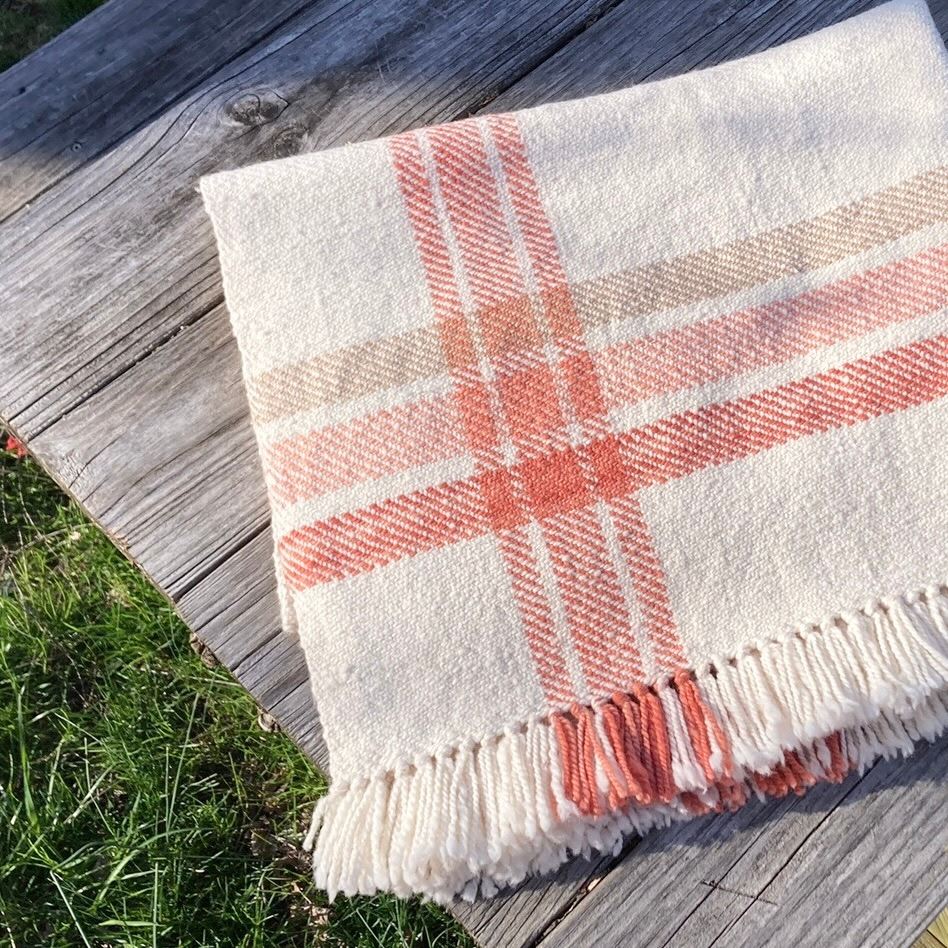
Following the initial Zoom meeting, the weavers gathered in person at Local Cloth, with the rainbow of yarn spread out on a table and colored pencils and paper in hand to draw out designs and create the weaving plan. Out of that meeting 19 designs emerged, featuring plaids, stripes and twills. Our weavers next created a sample blanket of each design. Each design was named after a town or city where the farmers, dyers and weavers for the project reside, or one of the mountains or watersheds that grace our region.
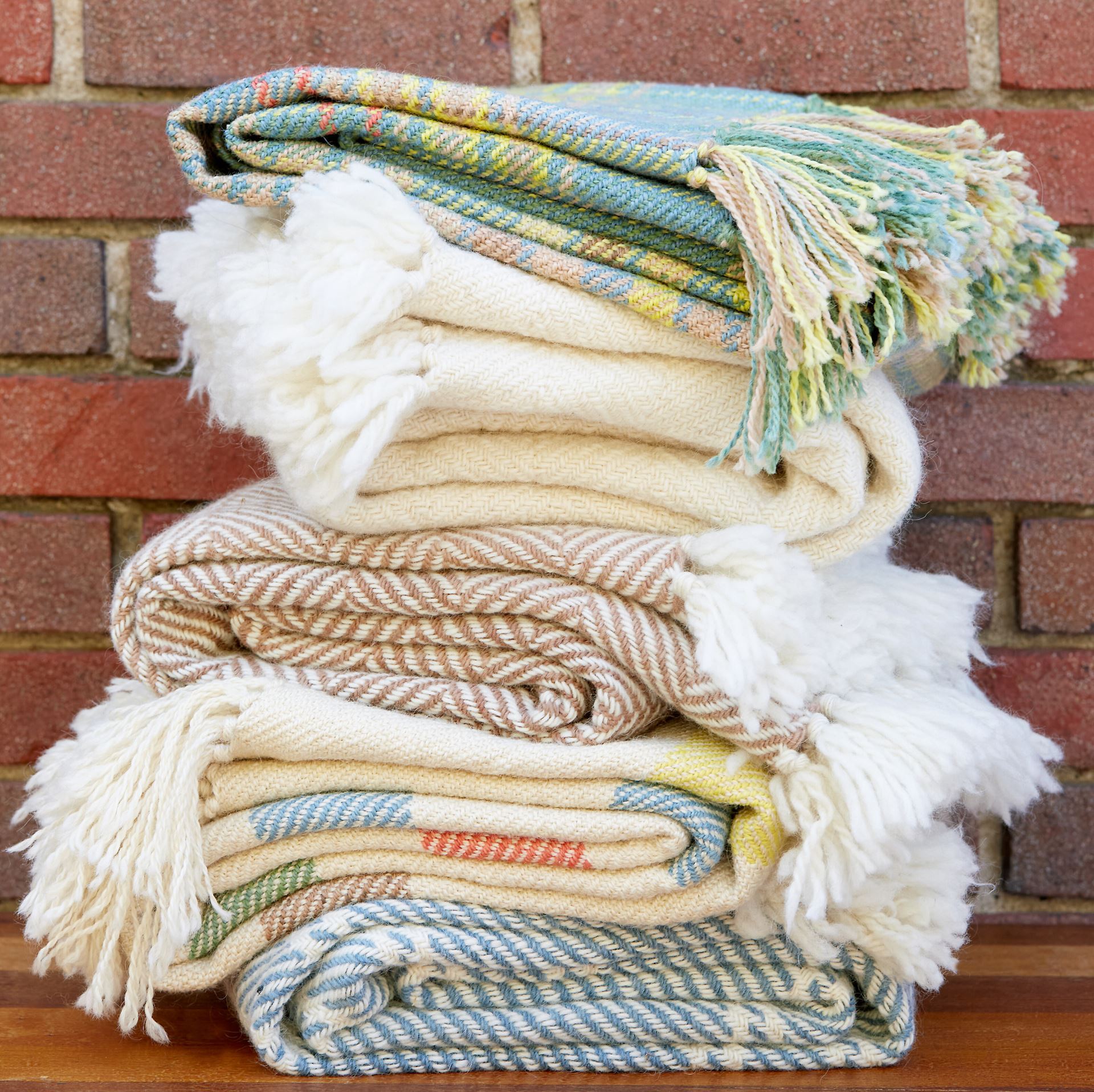
Next we sent the blanket designs on tour - to galleries and fairs - asking the community to vote on their favorite design. Over 1500 votes were cast and ultimately five designs emerged as the fan favorites that we produced in our first year: Asheville, Black Mountain, Barnardsville, French Broad River and Pisgah. Our design process was truly a collaborative effort with input by hundreds of people in our community in the end. Each year we will unveil a new design or two until all 19 are finally out in the world. Stay tuned!
STEP 8 | WEAVING
Weaving is where the magic happens, where the designs come to life. It is the culminating and interwoven tale of fiber animal to farmer to shearer to dye plant to dyer to designer to weaver. Precision, movement, and rhythm all play their part in the art of weaving. We are fortunate to have worked with 7 stellar local weavers over the course of our project thus far. All hailing from the Textile Program at Haywood Community College and from the Fiber Arts Program at Warren Wilson College under the guidance of Director Melanie Wilder.



.png)
.jpeg)
.png)
.JPG)

.JPG)
.jpeg)
.jpeg)
.jpeg)
.jpg)
.jpg)
.jpeg)
.jpeg)
.jpg)
.jpeg)
.JPG)
.jpeg)


.jpg)
.jpeg)
.jpeg)
.jpg)

%20(1).png)

.png)